
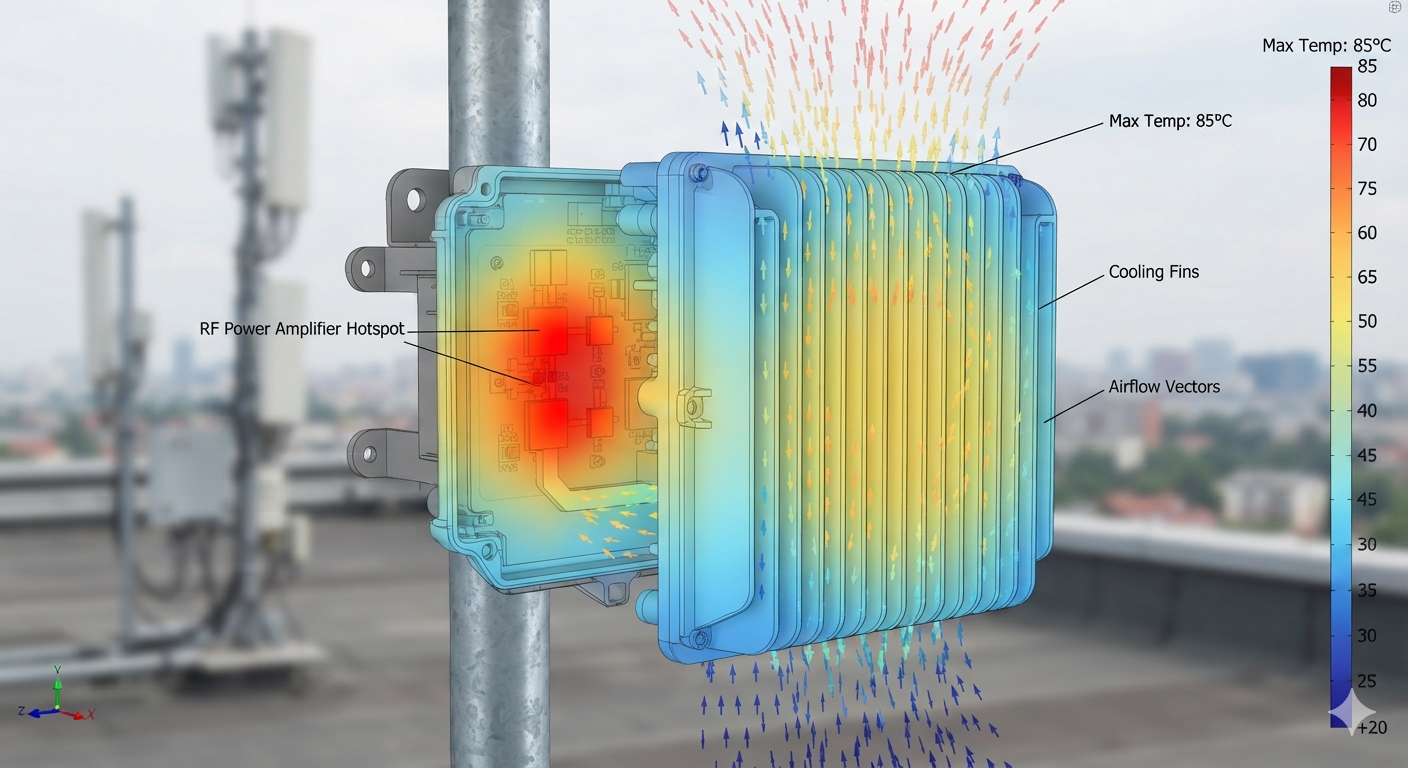
RF and Microwave Transmission
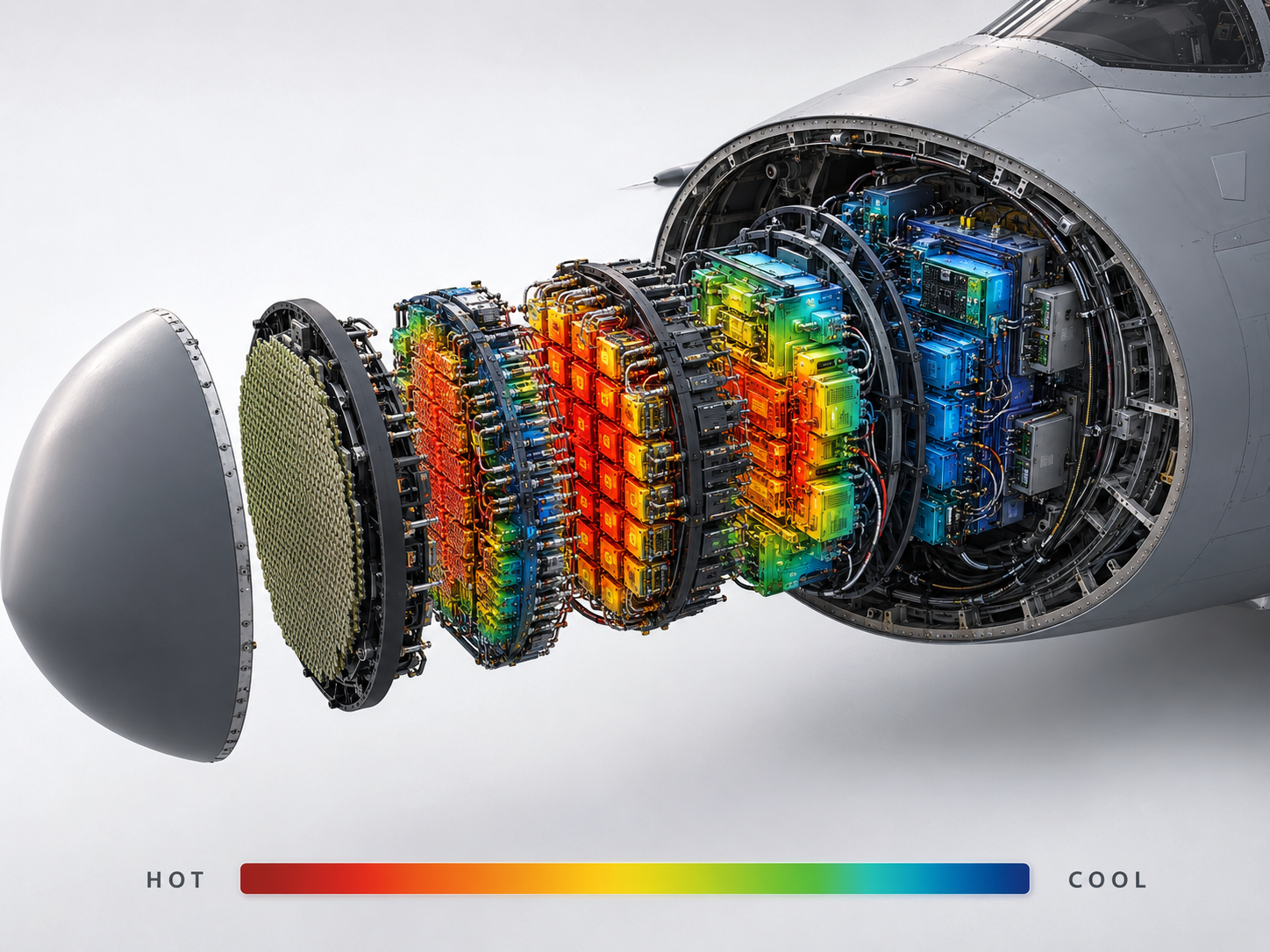
The latest solid-state power amplifiers, traveling wave tubes, and T/R modules have higher heat fluxes than ever before. Traditional heat sinks and forced-air cooling can’t keep pace with the heat dissipation requirements of these devices. In addition, space constraints mean that adding heavy cold-plate cooling loops or larger fans are both bad options.
Download Our
White Paper

What is needed is an entirely new approach to power electronics cooling. One that:
Efficiently cools high-power microwave and power electronic components. Reduces hot spots and thermal gradients. Allows higher power output. Eliminates fans and other mechanical cooling components. Protects electronics from environmental contaminants. Enables sealed equipment designs for harsh environments. Improves cooling for both pulsed and high duty cycle applications. Reduces cooling system size and weight.
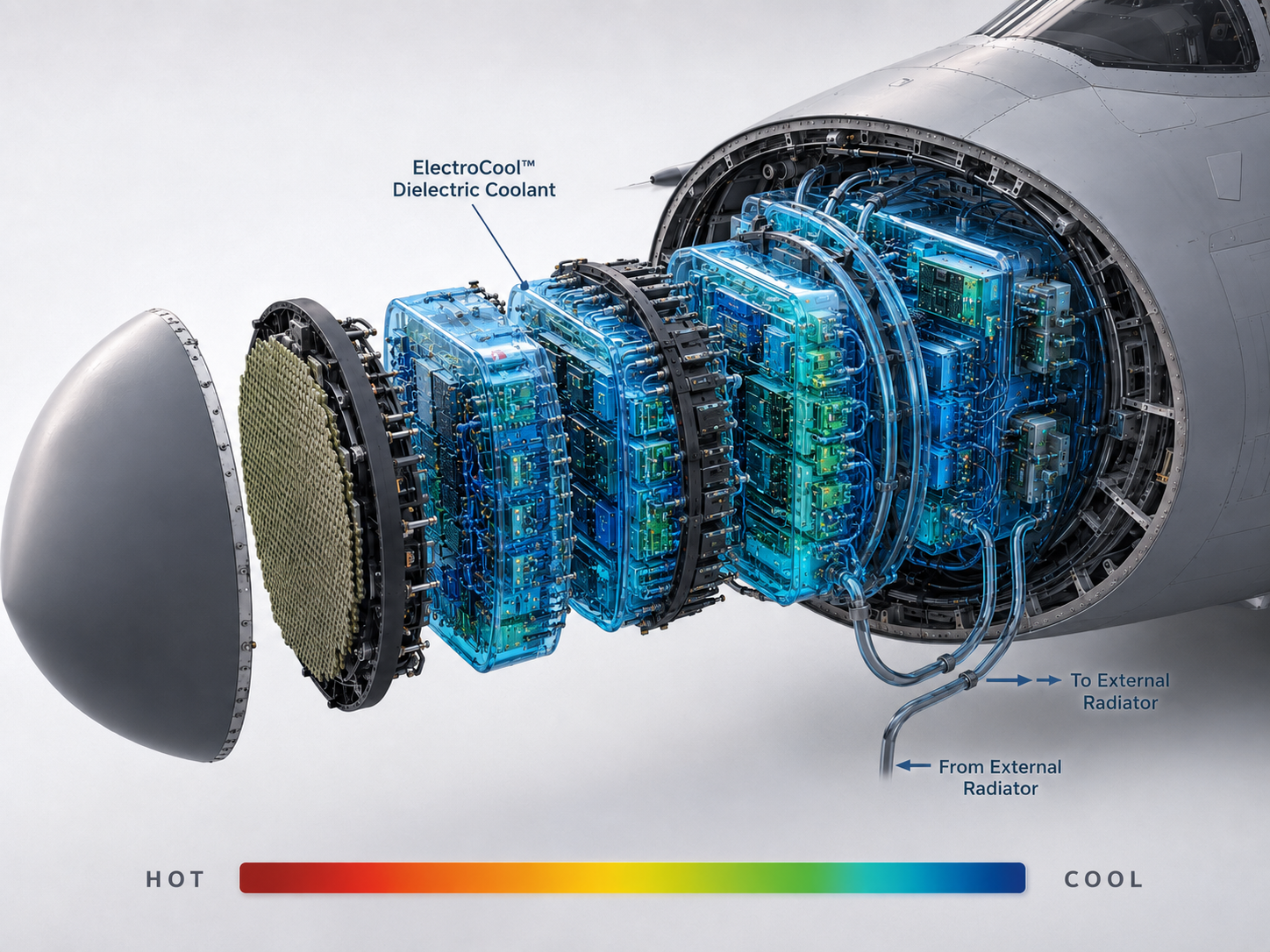
Immersion Cooling is the solution.
Immersion Cooling refers to immersing hot electronics directly into a flowing stream of dielectric fluid. No protective coatings are needed; the Coolant is compatible with all of the materials on the circuit board. The Coolant has a dielectric strength of tens of thousands of volts, so electrical integrity is maintained. The Coolants are about 1600 times more efficient at heat transfer than air, so you can pack a lot of cooling in a small space.
Immersion Cooling is simple to deploy, operate, and maintain. It’s making it possible to cool RF power amplifiers, GaN and SiC devices, processors, FPGAs, and power electronics in spaces where conventional air cooling, heat sinks, and cold plates become impractical.
Immersion Cooling has been used in Data Center and other computational workspaces for more than 10 years. It’s a proven, safe Thermal Management technology.
By placing dielectric coolant in direct contact with the heat-generating components, Immersion Cooling reduces localized hot spots, lowers semiconductor junction temperatures, and distributes heat more uniformly across the system. This allows designers to increase power density, reduce enclosure size and weight, and support higher output from compact microwave transmitters, phased-array radar modules, electronic-warfare systems, satellite communications equipment, and other demanding platforms.
How ElectroCool Coolants Can Solve Your Thermal Problems
The future of 5G and 6G communications, AESA radar, electronic warfare, satellite communications, AI-enabled edge systems, autonomous vehicles, and high-power microwave transmission depends on increasingly powerful chips operating in smaller packages. Many of these devices dissipate hundreds of watts from extremely small surface areas and are deployed in sealed, airborne, outdoor, mobile, or space-constrained environments.
Immersion Cooling provides a practical way to manage these concentrated thermal loads. It can scale from a single high-power module to a complete electronics enclosure while reducing thermal resistance, cooling-system complexity, parasitic power consumption, and long-term operating costs
